Kaftan vs Takchita: What's the Difference?
A kaftan is a single, full-length garment worn on its own. A takchita is a two-layer outfit: a fitted underdress called the tahtiya, worn beneath an overlayer called the dfina, and usually cinched at the waist with a belt. Both come from the same Moroccan tradition, but they feel, move and photograph quite differently, so it helps to know which one suits your occasion.
The kaftan: one piece, pure line
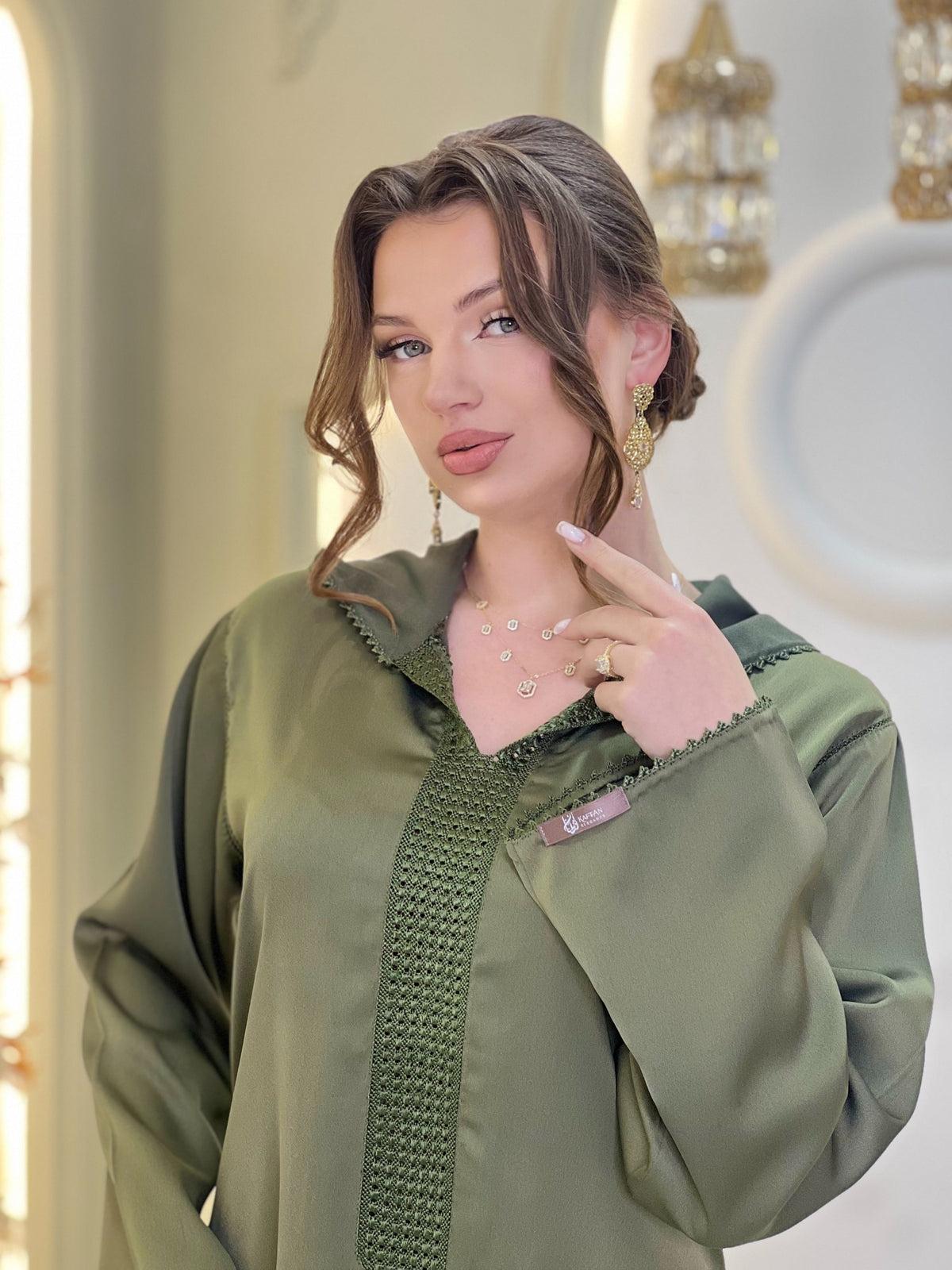
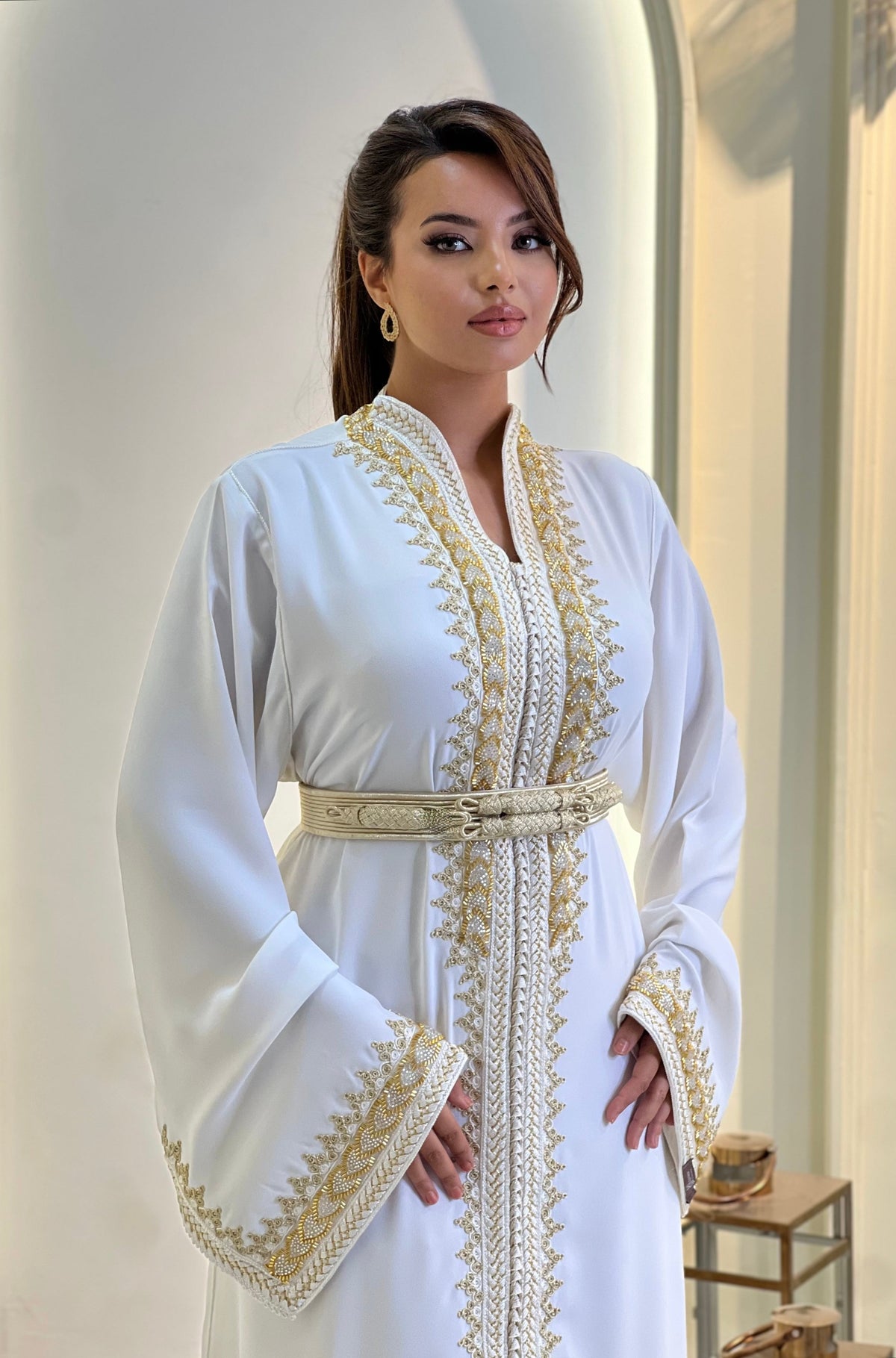
The Moroccan kaftan is cut as one long garment, typically with long sleeves and an opening or a line of buttons down the front. Its beauty lies in the fabric and the finishing: sfifa (braided trim) running along the seams, aakad (small knotted buttons), hand embroidery, beadwork or crystals. Because it is a single layer, a kaftan is lighter, easier to wear for long hours and simpler to put on.
In everyday conversation many people use the word "caftan" for any festive Moroccan dress, takchitas included, so you will often see both terms used loosely. Strictly speaking, though, the kaftan is the one-piece garment.

Our Caftan Hind, in fluid crepe, is a good example of the one-piece silhouette: clean lines, traditional detailing and an easy fit.
The takchita: two layers, more ceremony
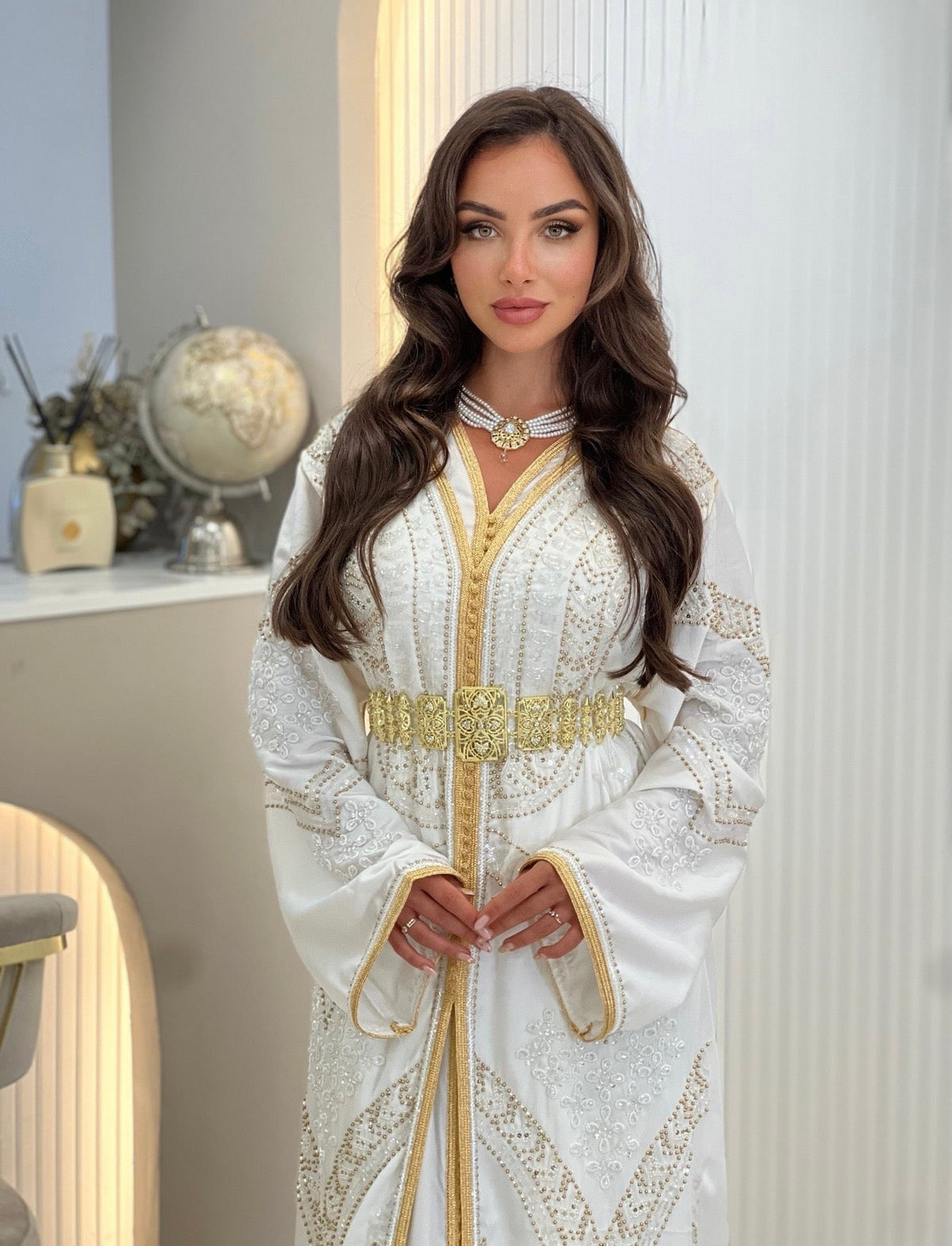
The takchita is built in layers. The tahtiya is the underdress, usually in a solid, opaque fabric such as crepe, satin or drap de soie. The dfina is worn over it and is often the showpiece: it may be sheer (tulle, organza, chiffon or lace), richly embroidered, or open at the front so the underdress shows through.
That interplay between the two layers, a contrast of colour, texture or transparency, is what gives the takchita its depth and its ceremonial presence. It has more volume and more movement than a kaftan, and it is the outfit most closely associated with weddings and the bride's changes of dress.

On our store, takchitas live in the Takchitas & Lebsas collection, and our most elaborate pieces, such as the one-of-a-kind Exclusive Takchita Adila, are gathered in the Exclusive Collection.
The belt: the mdamma
The belt, or mdamma, is part of the look for both garments. Traditionally it can be a metal belt in gold or silver tones, or a wide band of embroidered fabric. On a kaftan it defines the waist; on a takchita it also holds the two layers together and shapes the silhouette. Most of our kaftans and takchitas come with a matching belt, and you can explore other options in Jewellery & Accessories.
Kaftan vs takchita at a glance
- Construction: a kaftan is one garment; a takchita is an underdress (tahtiya) plus an overlayer (dfina).
- Weight and comfort: a kaftan is generally lighter; a takchita has more fabric and more structure.
- Look: a kaftan reads as elegant and streamlined; a takchita reads as layered, voluminous and ceremonial.
- Fabrics: both use crepe, satin, velvet or drap de soie; takchitas often add a sheer layer of tulle, organza, chiffon or lace.
- Belt: optional styling on a kaftan, almost always part of a takchita.
When each is worn
There are no strict rules, and customs vary between families and regions, but some patterns are common:
- Kaftan: Eid, family gatherings, dinners, engagement parties, evening events and, very often, as a wedding guest.
- Takchita: weddings, henna nights and engagement ceremonies, especially for the bride and for close family members who want a more formal look.
How to choose between them
Ask yourself a few practical questions:
- How formal is the event? For a wedding where you are the bride or close family, a takchita gives you that sense of occasion. For Eid or a dinner, a kaftan is usually the more natural choice.
- How long will you wear it? If you will be dancing, hosting or travelling for hours, the lighter kaftan is easier to live in.
- What is the season? Velvet and heavier layers suit winter; crepe, chiffon and organza feel better in warm weather.
- Do you want to rewear it? A kaftan is easier to restyle for different events with a new belt or jewellery.
Getting the size right
Whichever you choose, check our size guide before ordering. The measurements are of the garment, not the body, and the underarm-to-underarm width is the main reference. If you fall between two sizes, choose the larger one: the hips are designed with ease and the belt adjusts the fit at the waist. If you need a different length, you can request a complimentary length adjustment in your order notes.
Finding your piece
Both garments are made in our atelier in Tangier, where our artisans work the embroidery, sfifa and buttons by hand, and many pieces are one of a kind. If you want something light and timeless, start with our kaftans. If you are dressing for a wedding or a henna night and want the full ceremony of layers, explore our takchitas. And if you are unsure which fits your occasion, contact our team and we will gladly help you decide.